
3 min readEnhancewell
"I'm not flexible enough for Pilates" might be the most common thing people say before their first class. It's also one of the biggest misconceptions about the method. Pilates isn't a flexibility test. It's a strength-and-control practice, and stiffness is a perfectly good place to start.
Flexibility Isn't the Entry Requirement
Pilates asks you to move with control through the range you have, not to reach a certain depth. A smaller movement done with good alignment beats a big one done loosely, so you aren't judged on how far you go.
Over time, many people find their range of motion grows as they build strength and learn to breathe and settle into positions. That's a side effect, not a requirement.
How the Reformer Meets You Where You Are
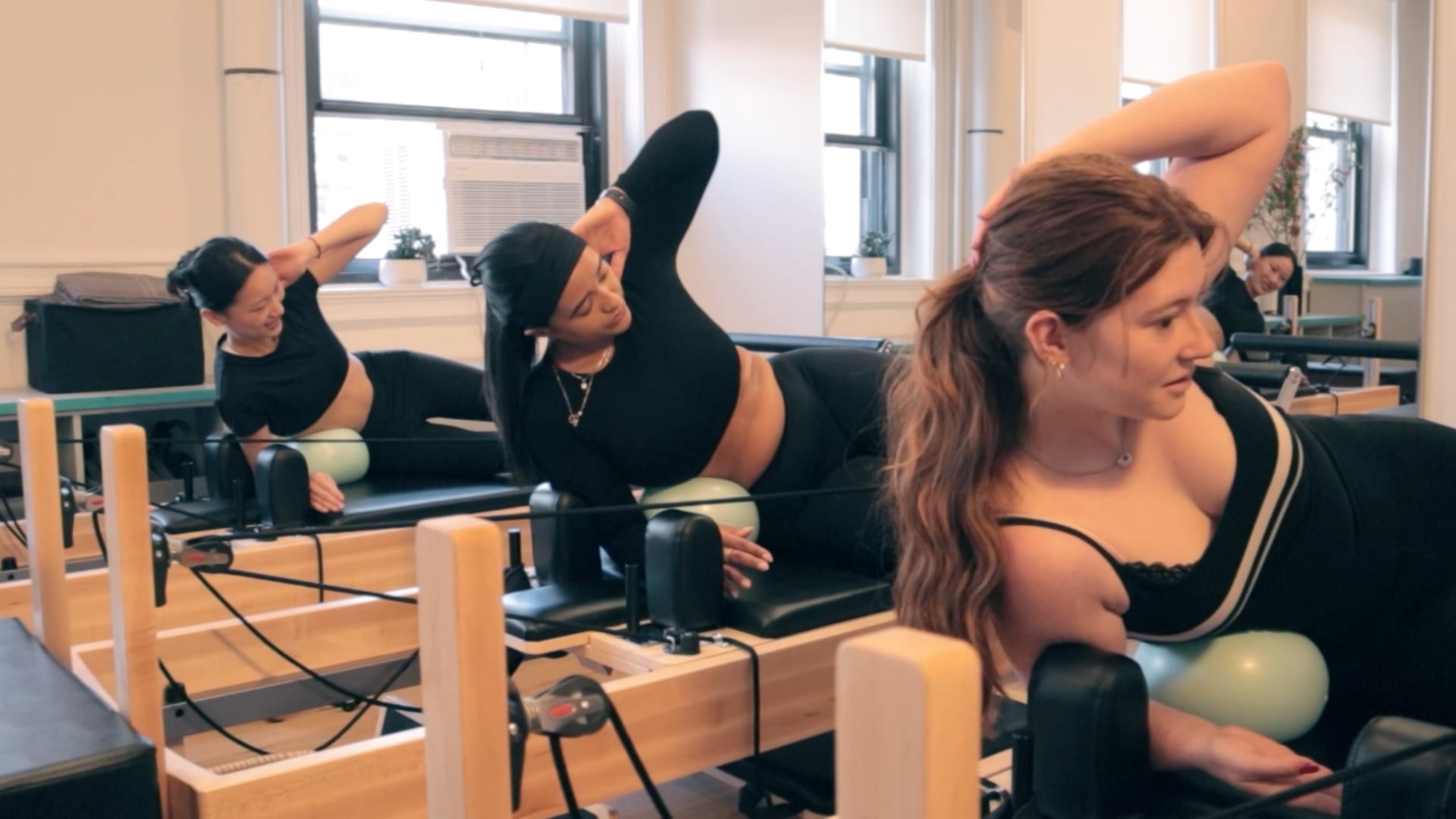
On a reformer, the springs and moving carriage can support body weight through an exercise, which makes many movements easier to control than the equivalent mat version. Instructors can also change spring settings, adjust straps and foot or hand positions, or add support such as a cushion when range is limited. For more on that, see reformer springs explained.
Where Stiffness Usually Shows Up
Every body is different, but a few areas come up often: tight hamstrings that make it hard to straighten the legs when lying down, stiff hips that limit how far the knees open or fold, and tight shoulders or upper back that make overhead reaches awkward.
In each case the exercise isn't skipped, it's modified. Bent knees, a smaller range, a strap or a different starting position can keep the work meaningful.
How to Get the Most From Your First Few Classes
- Tell your instructor. Mention any tight spots or limitations before class starts so they can plan around them.
- Stay in your range. Stop where you can keep your alignment. Don't force a position to match the person next to you.
- Breathe. Tension tends to make stiffness feel worse, and a steady exhale often helps a position settle.
- Measure control, not depth. Progress usually shows up as steadier, smoother movement before it shows up as bigger movement.
- Be consistent. A few weeks of regular sessions tells you far more than one heroic class. Our guide to how often to do Pilates can help you plan a realistic week.
A Word on Pain and Limits
A stretching sensation is normal. Sharp or pinching pain is not something to push through. Stop and tell your instructor. Enhancewell Pilates is fitness instruction, not medical treatment, and we don't diagnose or treat injuries. If you have a condition or injury, get clearance from your own physician or physical therapist first, and we'll adapt around the limits you share.
Ready to Try?
A private session gives you an instructor's full attention, which helps if you feel self-conscious about stiffness. If you'd rather start in a group, our classes are capped at six people. For more on tight hips in particular, The Modern Stoop-Sitter's Guide to Hip Mobility is a good next read.