
3 min readEnhancewell
Beyond the reformer and the mat, Pilates sessions often bring out small props: a ring here, a little ball there, a stretchy band. They can look like accessories. In practice they're teaching tools. Each one changes the feedback your body gets, which makes an exercise easier to feel, easier to control, or harder to cheat.
The Magic Circle
The magic circle, also called the Pilates ring, is a light, flexible ring with padded handles or pads. You squeeze it between your hands, thighs or ankles, or press against it.
What it does: It adds light resistance and gives you something to push into, which can help you feel the muscles of the inner thighs, chest and arms working. Common use: squeezing it between the thighs during a bridge so the legs stay engaged.
The Small Ball
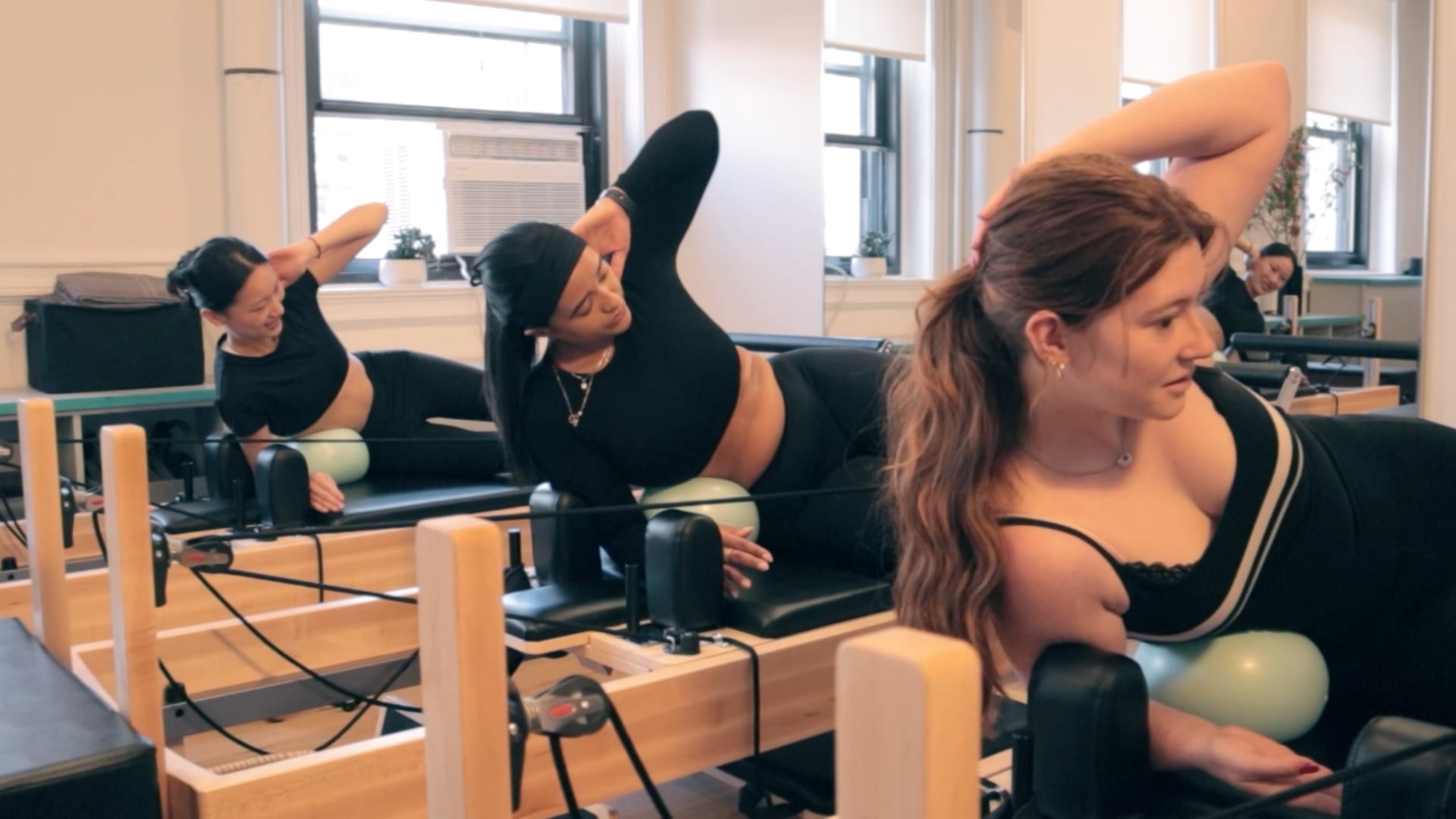
A small inflatable ball, often somewhere around 8 to 10 inches across, is used for support and for feedback.
What it does: Placed under the pelvis or between the knees, it gives you something to press into and helps you find alignment. Common use: a gentle squeeze between the knees to keep the legs lined up, or a ball behind the lower back for support.
The Resistance Band
A flat, stretchy band adds resistance or helps you reach. Bands come in different tensions.
What it does: Held in the hands or looped around the feet, it adds load to an arm or leg movement, or assists a stretch. Common use: arm exercises, or looping it around the feet for leg work.
The Foam Roller
A foam roller is often used for balance and support.
What it does: Lying or sitting on a roller is an unstable surface, which asks your stabilizing muscles to work harder. In other positions it can support the spine or open the chest.
Why Instructors Use Props
- Feedback: Pressing into something makes it easier to feel the right muscle.
- Support: A prop can make a position possible when range or strength is limited.
- Challenge: Resistance or instability makes familiar exercises harder.
- Variety: The same movement can feel brand new with a different tool.
Do You Need to Buy Any?
No. You don't need to buy props to start Pilates, and your instructor will choose what suits your session. If you'd like to practice at home, a mat is the first thing worth having. Ask your instructor which props, if any, make sense for you.
A private session is a good place to ask which tools suit your body, and you can book a first visit any time. Curious about the bigger pieces? Read about the Wunda Chair and the Ladder Barrel.