
2 min readEnhancewell
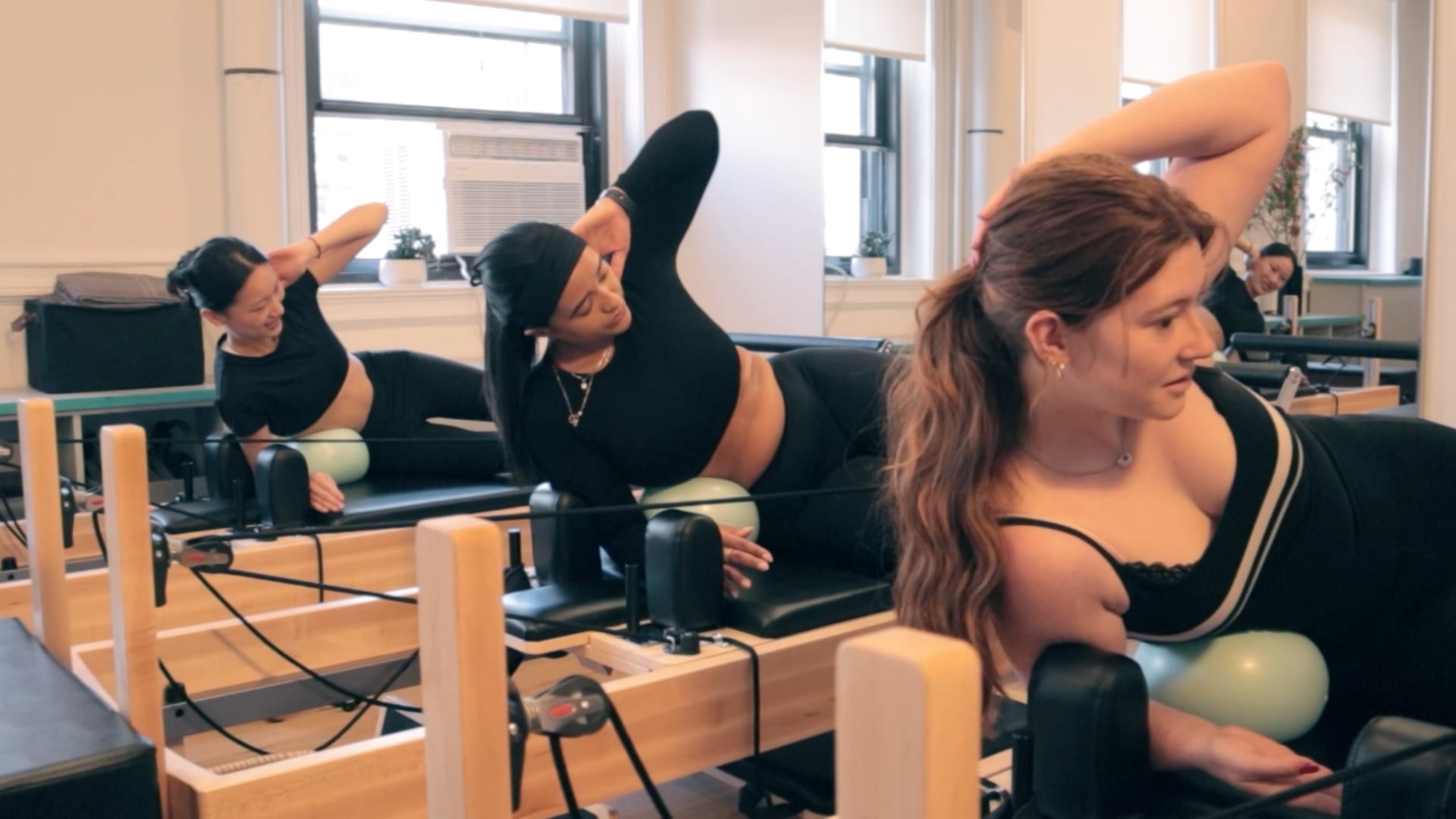
Ask ten people what Pilates is and half will describe someone on a mat doing the Hundred. The other half will describe a sliding carriage, straps and a rack of springs. Both are right. Mat and reformer Pilates come from the same method, but they feel very different, and the best place to start depends on what you want out of it.
Same Principles, Different Tools
Joseph Pilates built his method around control, precision, breath and a strong center. On the mat, your own body weight is the only resistance. On the reformer, springs add or subtract load, and the moving carriage asks you to control motion in both directions.
That one difference changes a lot. Springs can make an exercise harder, but they can also make it more accessible by supporting you through a range of motion you can't yet hold on your own.
What the Mat Does Best
- Portability. You can practice in a living room, a hotel room or a park.
- Honesty. With nothing to help you, the mat shows exactly where your strength and control stop.
- Foundations. Breathing, pelvic placement and core engagement are often easiest to learn without equipment in the way.
Mat work is hard. Many classical instructors consider the full mat sequence the most demanding part of the method, precisely because there's no spring to lean on.
What the Reformer Does Best
- Adjustable resistance. Spring changes let one exercise scale from rehab-gentle to genuinely challenging.
- Feedback. The carriage moves if you lose control, so you feel instantly when you've let go of your center.
- Variety. Footwork, long-box and short-box work, and standing exercises cover the whole body in one session.
If you're coming back from time off, working around an old injury, or simply want more guidance in each movement, the reformer is often the friendlier first step. Read more on our reformer Pilates page.
How to Choose
Start with the mat if...
You want a practice you can do anywhere, you're on a tight budget, or you like the idea of building strength with nothing but your own body.
Start with the reformer if...
You want individual attention and adjustable support, you're recovering from an injury, or you've tried mat classes and found them hard to follow without hands-on cueing.
The Real Answer: Both
Most long-term Pilates students end up doing both. Reformer work builds strength and control with support; mat work proves you can do it on your own. Each makes the other better.
At our Union Square studio, a private session usually moves between the reformer, tower, chair and mat, depending on what your body needs that day. If you're not sure where to begin, that's the simplest way to find out.