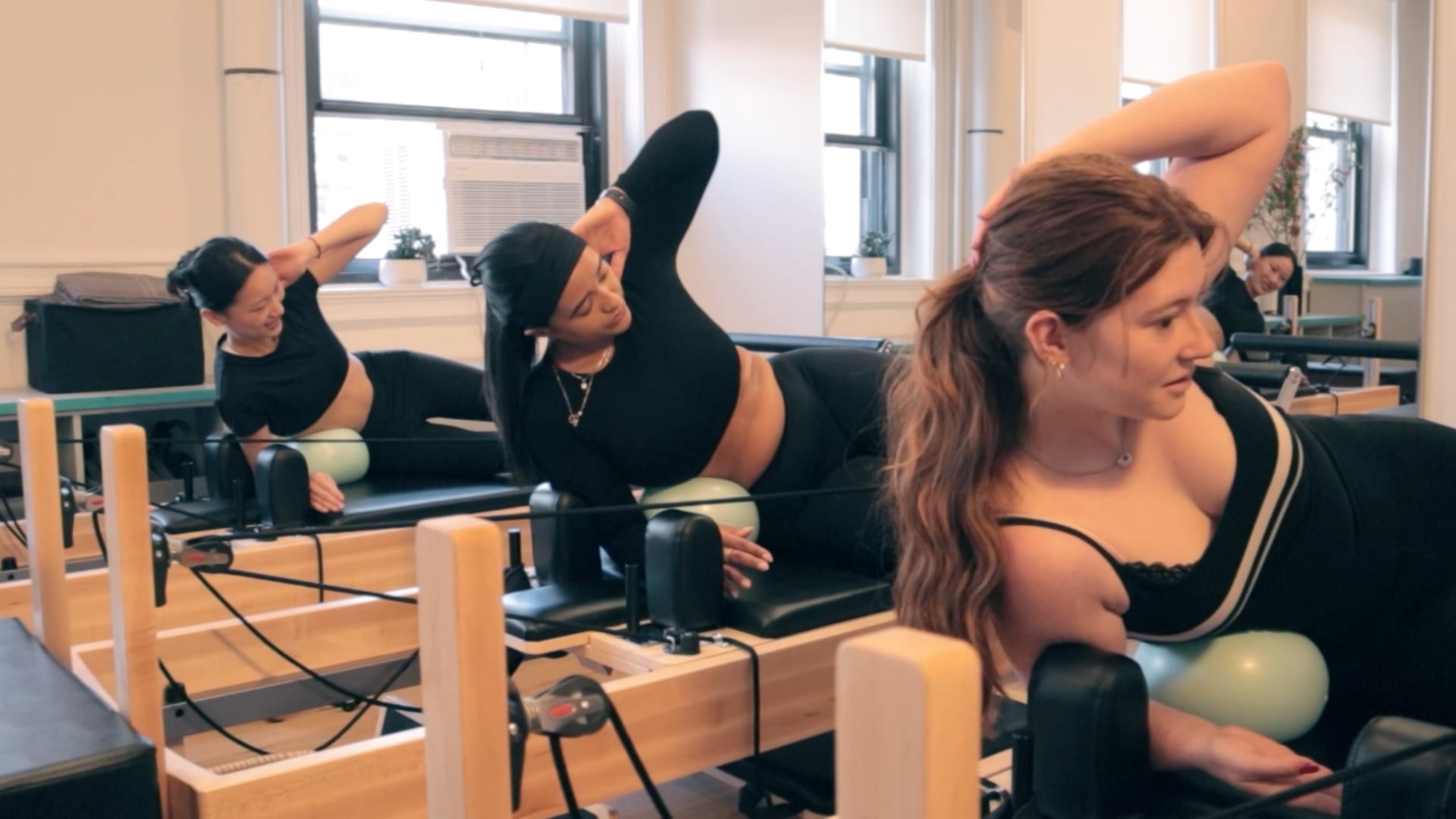

3 min readEnhancewell
Here’s an actual text I received from a friend about her first Pilates classes: They were challenging, but in a motivational way that made me feel stronger😍
I’ve known this person for 6 years. We talk Pilates all the time. She loved our private mat Pilates sessions. I even taught a class with her and her mom. And yet, she’d never stepped foot on a Reformer.
Why?
- She didn’t have grip socks.
- The price was too high.
- There wasn’t a studio close to her apartment.
Those are all valid reasons… but when she dug deep, she admitted that the real reasons she’d never tried were that she was intimidated by the equipment and worried she’d embarrass herself.
She’s not alone.
So I thought I’d go back to the basics today and tell you everything my clients say they wish they’d known before signing up for their first class.
Demystifying the Reformer
Think of the Reformer as a bed with a sense of humor. Yes, it looks like a medieval torture device, but its job isn't to break you—it's to support you.
While the mat uses your own body weight as the primary source of resistance, the Reformer introduces a system of springs and pulleys. This creates a unique paradox: sometimes the machine makes an exercise harder, and sometimes it acts as your best friend, catching you before you lose your form.
The Anatomy of the Machine
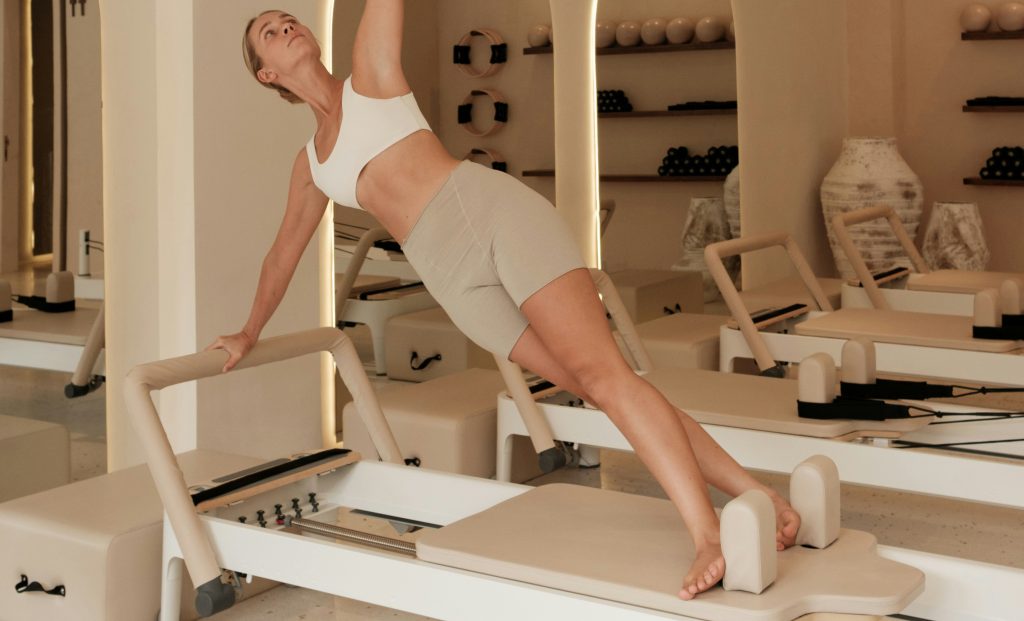
Before you hop on, let’s break down the "scary" parts:
- The Carriage: The sliding platform you sit, stand, or lie on. It moves back and forth, challenging your stability and demanding your core’s full cooperation.
- The Springs: The heart of the machine. They provide the resistance. They’re color-coded to make it easy for you to know which ones to add or remove.
Pro tip: More springs don’t always mean harder. In many moves, fewer springs mean less support, meaning you’ll need to use all your muscles to stay upright. Your instructor will offer modifications to make exercises easier or more difficult. And there’s no shame in starting out with the easy option!
- The Footbar: This is where your feet (or hands) go to push the carriage away.
- The Straps: These are the loops near the headrest. The 2-in-1 loops have a smaller loop that’s usually for your hands and a larger loop that’s usually for your feet.
- The Reformer Box:Placed lengthwise against the shoulder rests (long box) or across the shoulder rests (short box), this accessory will enhance your seated and lying exercises.
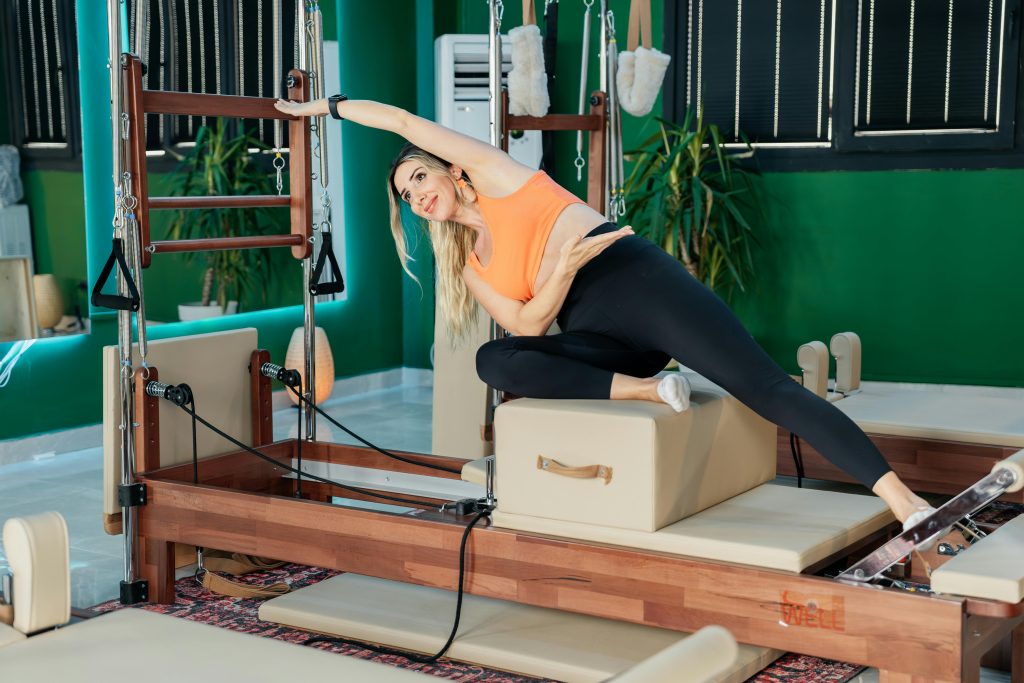
Your First Class
Here is what actually happens in those first 50 minutes:
- You will fumble with the loops. Everyone does. It’s a rite of passage to accidentally kick a strap or spend five seconds wondering which loop is the small one. Your instructor expects this and is there to help.
- Making noise is normal. If the carriage slams back into the frame with a loud thump, don't panic. It just means you’re moving with a lot of power! Over time, you'll learn the art of the quiet landing.
- Your muscles will ache. You’ll feel the muscles in your inner thighs and deep abdominals in ways you never thought possible. Welcome to step one of your full-body transformation!
That friend who texted me about her first Pilates class says she only has one regret: not trying Reformer Pilates sooner.
Don’t make the same mistake! Sign up for your first private session or group class today. Or, get the best of both worlds with our Foundations Package. It combines two privates and four group classes to get you comfortable with the basics before introducing you to the awesome Pilates community at Enhancewell Collective!